

Introduction and Context
The emergence of electric Vertical Take-Off and Landing (eVTOL) aircraft is reshaping air transportation by combining electric propulsion, digital flight control, and advanced automation. These aircraft promise safe and sustainable mobility in urban and regional environments. While prototypes demonstrate strong technological potential, the main barrier to large-scale deployment lies in certification rather than engineering.
Advanced Air Mobility (AAM) introduces new operational concepts that go beyond existing regulations, blending rotorcraft, fixed-wing, and autonomous systems. Certifying these aircraft requires adapting legacy frameworks such as CS-23, CS-27, and Part 23 to accommodate new architectures, batteries, and automation systems. Manufacturers must align innovative designs with established safety and certification standards while meeting expectations from multiple global authorities
Certification Landscape
Traditional certification frameworks were designed for conventional aircraft and are not fully suited to eVTOL designs. In the United States, the FAA has adapted existing regulations by applying Part 23 and Part 27 with special conditions and advancing initiatives like MOSAIC to better accommodate emerging aircraft categories. This approach aims to balance flexibility with high safety standards.
In Europe, EASA introduced the Special Condition VTOL (SC-VTOL), a dedicated framework tailored to novel aircraft. It defines categories based on operational use and includes detailed Means of Compliance covering system safety, software, hardware, and environmental requirements. While comprehensive, these standards require a high level of design maturity. Other regions, including China and Japan, are also developing localized certification approaches, highlighting strong global momentum in AAM.
Opportunities and Challenges
Opportunities
The development of eVTOL aircraft presents strong potential to transform urban and regional mobility through cleaner, more efficient, and flexible transportation solutions. As certification progresses, it enhances program credibility, attracting investor confidence and enabling new commercial models such as air taxis and regional transport services.
Advancements in avionics, automation, and airspace integration technologies further support this growth, enabling scalable and interconnected Advanced Air Mobility ecosystems. Early deployment opportunities, particularly in controlled urban environments and short-range routes, provide a pathway for gradual adoption and market expansion.
Challenges
Despite these opportunities, the industry faces significant challenges. Certification remains the primary hurdle, requiring compliance with stringent safety standards that were not originally designed for such novel aircraft. Energy systems, particularly high-density batteries, introduce risks related to thermal management, endurance, and failure containment.
Achieving the required levels of redundancy, system reliability, and software assurance further increases design complexity and development effort. Fragmented global certification frameworks may also lead to duplicated efforts and higher costs for manufacturers.
Infrastructure readiness, including vertiports, charging networks, and traffic management systems, is another critical barrier. Overcoming these technical, regulatory, and operational challenges will be essential to enable widespread adoption and long-term commercial success.
Systems and Integration
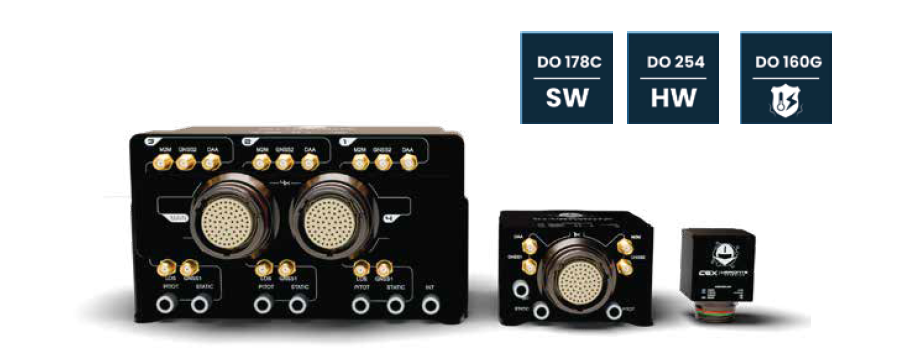
Meeting certification requirements demands systems designed with compliance in mind from the outset. Advanced avionics incorporate redundant architectures, fault monitoring, and independent power domains to ensure safe operation even under failure conditions. Reliable propulsion systems with integrated protections and thermal management are equally essential for meeting safety objectives.
Beyond onboard systems, integration into broader airspace infrastructure is a key enabler. Technologies such as UAS Traffic Management (UTM), ADS-B, and Remote ID allow coordination with other airspace users. These capabilities support beyond-line-of-sight operations and are fundamental to scaling Advanced Air Mobility networks.
Market Impact and Regional Differences
Certification plays a central role in shaping the commercial trajectory of eVTOL programs. For investors, it indicates maturity and reduced risk, while for operators, it defines operational scope, routes, and regulatory approval. Each certification milestone directly influences market confidence and partnership opportunities.
Regional approaches vary. The U.S. emphasizes flexibility and early-stage operational testing, making it attractive for innovation and investment. Europe offers a more structured and rigorous framework, providing clarity and consistency. In Asia, strong government support and national strategies are accelerating development. Despite these differences, global alignment of certification standards is expected over time.
Future Outlook
The coming decade will be pivotal as eVTOLs transition from prototypes to certified aircraft. Initial deployments are expected within the next few years, focusing on urban air mobility and cargo applications under controlled conditions. These early operations will provide valuable data to refine both technology and regulatory frameworks.
As confidence grows, operations are likely to expand into broader mobility networks, including regional transport. This expansion will depend on supporting infrastructure such as vertiports, charging systems, and integrated traffic management. Ultimately, global regulatory harmonization will be essential to enable seamless international operations and unlock the full potential of Advanced Air Mobility..